
Laryngeal & Hypopharyngeal Cancer Surgery in Ahmedabad
About Laryngeal & Hypopharyngeal Cancer Surgery
The larynx, or voice box, is involved in speaking, breathing and protecting the airway during swallowing. The hypopharynx is the lower part of the throat that helps move food towards the oesophagus. Cancers in these areas can affect voice, swallowing and breathing as they progress.
Surgery depends on the tumour’s exact location, size, stage and involvement of nearby structures. Selected cancers may be treated through the mouth using endoscopic or laser techniques, while more extensive tumours may require partial or total laryngeal surgery, pharyngeal resection or neck dissection.
Dr. Akshar Patel is a Head & Neck Surgical Oncologist with expertise in Laryngeal & Hypopharyngeal Cancer Surgery in Ahmedabad, including endoscopic, minimally invasive and open surgical approaches.
When Should You Get Your Throat Checked?
Throat and voice symptoms can occur for many reasons, but persistent or unexplained changes should be evaluated, particularly when several symptoms occur together. You should seek an evaluation if you notice:
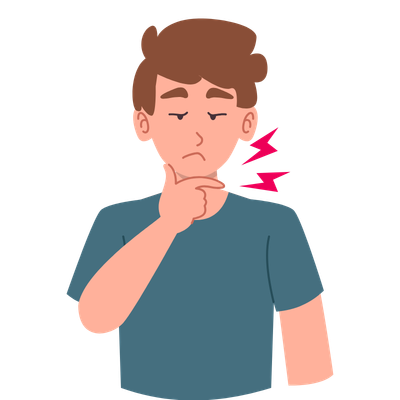
Persistent hoarseness or voice change

Difficulty or pain while swallowing
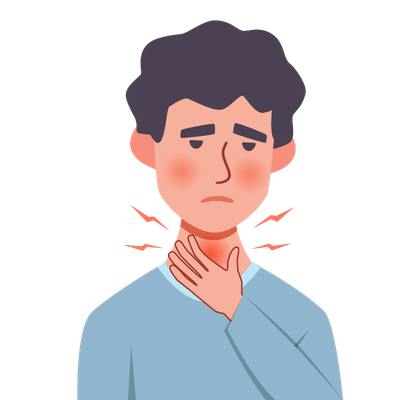
A persistent sore
throat

Pain referred towards the ear

Difficulty breathing or noisy breathing
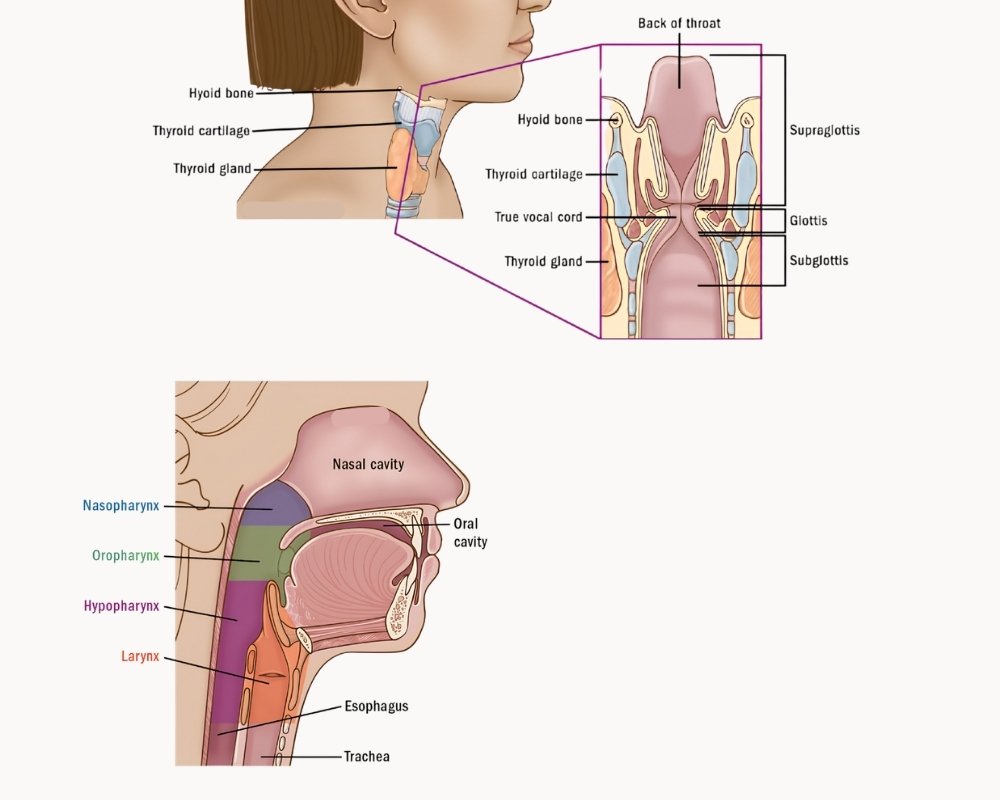
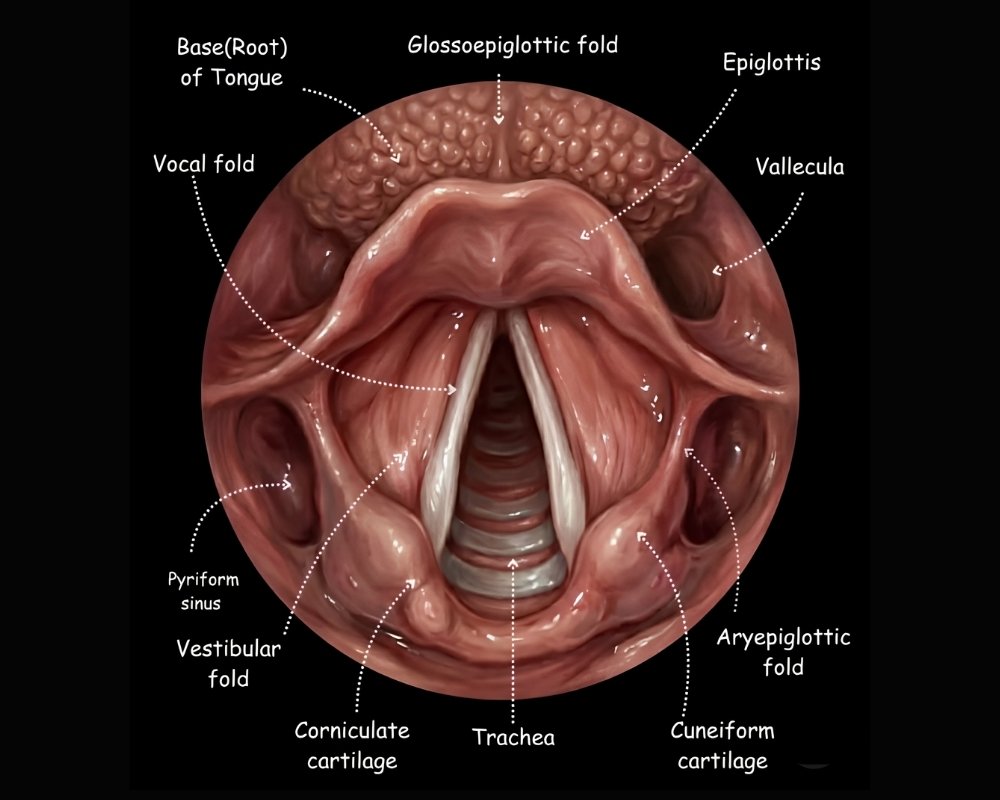
Where Can These Cancers Develop?
The larynx and hypopharynx contain several anatomical regions, and the tumour’s location influences its symptoms, staging and surgical treatment.
How Do We Know How Far It Has Spread?
A detailed examination is combined with tissue diagnosis and imaging to establish the tumour’s exact location and extent.
01
Endoscopic Examination
The larynx and hypopharynx are examined using appropriate endoscopic techniques to identify the tumour and assess nearby structures.
02
Biopsy & Pathology
A tissue sample confirms whether the lesion is cancerous and provides information about its pathological type.
03
Imaging
CT, MRI or PET-CT may be advised to assess deeper tissue involvement, cartilage invasion and lymph nodes in the neck.
04
Neck Assessment
The neck is examined for enlarged or suspicious lymph nodes because cancers in these areas can spread to regional lymph nodes.
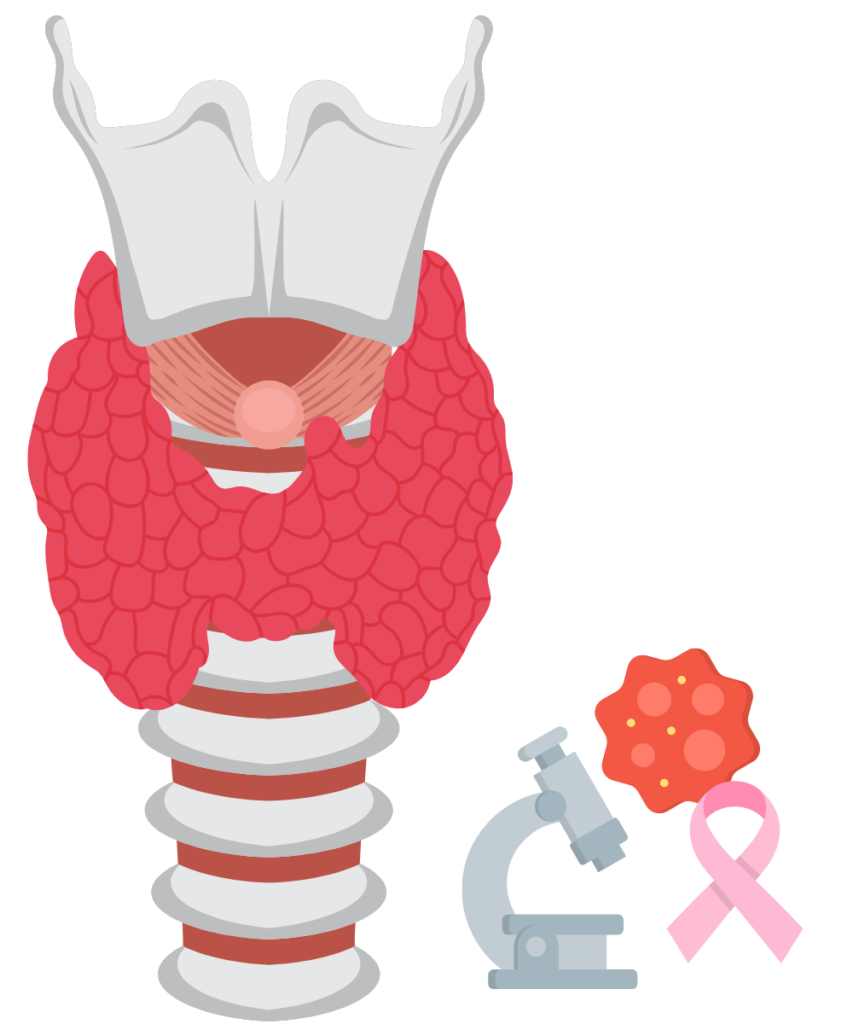
How Do We Decide What Surgery Is Needed?
The surgical approach depends on the tumour’s location, size, stage and relationship with the larynx, hypopharynx and surrounding structures. The findings help determine whether an endoscopic, partial or more extensive open procedure is appropriate. The decision may consider:
- Exact tumour location and extent
- Vocal cord involvement and movement
- Depth of hypopharyngeal tissue involvement
- Lymph node involvement in the neck
- Airway and swallowing function
- Previous radiation or cancer treatment
Your Laryngeal & Hypopharyngeal Cancer Surgeon
Dr. Akshar Patel is a Board-certified Head & Neck Surgical Oncologist with dedicated expertise in the surgical management of laryngeal, hypopharyngeal and other head and neck cancers.
His surgical practice includes laryngeal cancer surgery, hypopharyngeal cancer surgery, Transoral Laser Microsurgery (TLM), endoscopic laryngeal surgery, minimally invasive procedures, neck dissection and complex head and neck cancer surgery.
For cancers in the larynx and hypopharynx, surgical planning considers tumour clearance along with the functions of voice, swallowing and breathing. Where appropriate, endoscopic or minimally invasive approaches may be considered for selected tumours.
He is an active member of the Indian Association of Surgical Oncology (IASO), American Society of Clinical Oncology (ASCO), and Society of Surgical Oncology (SSO) and participates in national and international oncology meetings and academic activities.

Dr. Akshar Patel - Consultant Head & Neck Cancer Surgeon
What Does Laryngeal & Hypopharyngeal Cancer Surgery Involve?
The exact procedure depends on the tumour’s location and how far it has spread. The choice of procedure depends on the tumour rather than a fixed operation for every patient.
Transoral Laser Microsurgery
Selected laryngeal tumours can be removed through the mouth using microscopic visualization and a laser, avoiding an external surgical incision.
Endoscopic Laryngeal Surgery
Endoscopic techniques allow the surgeon to access and remove selected tumours through the mouth while directly visualizing the laryngeal structures.
Partial Laryngectomy
Part of the larynx is removed when the tumour can be adequately treated while preserving useful voice and swallowing functions.
Total Laryngectomy
The entire larynx is removed when the tumour is too extensive for a larynx-preserving operation. A permanent opening called a stoma is created for breathing.
Hypopharyngeal Tumour Resection
The involved portion of the hypopharynx is removed when the tumour is suitable for surgical treatment, with reconstruction considered for larger defects.
Will You Need Other Cancer Treatments?
Surgery may be used alone or combined with other treatments depending on the cancer stage and final pathology.

Radiation Therapy
Radiation may be recommended after surgery when pathological findings indicate a higher risk of recurrence.
Chemotherapy
Systemic treatment may be considered for selected advanced cancers, particularly when combined treatment is required.
Chemoradiation
Chemotherapy and radiation may be used together in certain advanced laryngeal or hypopharyngeal cancers.
Frequently Asked Questions
Can every laryngeal cancer be treated without removing the larynx?
No. Larynx-preserving surgery is suitable only for selected tumours. More extensive cancers may require total laryngectomy to achieve adequate cancer removal.
What is transoral laser microsurgery?
It is a technique where selected laryngeal tumours are removed through the mouth using microscopic visualization and a laser, avoiding an external surgical incision.
Will surgery affect my voice or swallowing?
The effect depends on the tumour location and amount of tissue removed. Larger procedures can affect voice or swallowing and may require rehabilitation during recovery.
What happens to breathing after total laryngectomy?
After total laryngectomy, the normal connection between the mouth and lungs is removed. Breathing therefore takes place permanently through a stoma in the neck.
Can I speak after total laryngectomy?
Yes, voice rehabilitation is possible after total laryngectomy. Options can include a tracheoesophageal voice prosthesis, electrolarynx or other speech rehabilitation methods.
What is hypopharyngeal cancer surgery?
It involves removing a tumour from the hypopharynx and may include nearby tissue or neck lymph node surgery. Larger defects may require reconstruction to restore the swallowing passage.

Take the Next Step
Persistent hoarseness, swallowing difficulty, throat discomfort or other symptoms should be evaluated when they do not settle. If cancer is diagnosed, determining its exact location and extent is essential before selecting surgery.
Dr. Akshar Patel provides surgical treatment for laryngeal and hypopharyngeal cancers, including transoral laser microsurgery, endoscopic procedures, laryngeal surgery, hypopharyngeal tumour resection and neck dissection when required. Book a consultation to discuss your diagnosis, reports and surgical options.